Permanently improve your struggling student's performance
We're Learning Technics! Our easy and fun therapy will get your child caught up in school without the use of medication.
As featured on:


- Years helping students succeed
- 30+
- Students who have graduated our program
- 5000+
- Grade levels improved by most students
- 1.5
Students Before Learning Technics: Struggle to stay on task, low reading comprehension, overwhelmed by how difficult it is to learn, and parents feel discouraged.
Students After Learning Technics: Learning is exciting, they feel confident in themselves, progress is clear, and parents have a true roadmap for success.
If your child...
- Is diagnosed with ADD/ADHD, Dyslexia, Processing Disorders, or any other learning disability.
- Requires more effort learning than others seem to use.
- Has shown low to no improvement while using resource/learning centers.
- Displays below average performance in some areas.
- Experiences high levels of frustration when learning new material.
If you answer yes to any of these, Learning Technics can help.
How it works
The brain is plastic and can be molded. It can be trained to grow like a muscle. Learning Technics provides physical and mental activities designed to strengthen weak processes.
We call this Physio-Neuro Therapy.
Here's an example:
Watch this video
Follow these steps
How to do it:
- Hold the pencils as described above and set the timer for 10 seconds.
- Looking from one sticker to the other is considered one pass
- If the student is below the age of 12, the goal is to have 18-19 smooth, rhythmic passes
- If the student is 12 years or older, the goal is to have 22-23 (no more) smooth, rhythmic passes
- Watch the student's eyes carefully for tracking difficulties such as:
- Eyes dipping: Eyes make a smiley face motion
- Undershooting: Eyes stop or pause briefly before they reach the sticker on one or both sides
- Overshooting: Eyes go past their target (the sticker) and come back to correct
- Hesitations: Eyes are jumpy and do not glide smoothly from one side to the other
Your goal? Mastery.
You continue to practice this same exercise everyday until specific requirements are met. For this activity, the masteries are:
- Focus: The student can easily keep eyes firmly fixed on each sticker while tracking from pencil to pencil.
- Cross-Pattern: The student can easily track across the vertical midline.
- Tracking: The student can accurately move eyes from sticker to sticker without dipping, overshooting or hesitations.
- Size: The student can easily move eyes from pencil to pencil with an even rhythm for 10 secs.
Other exercises?
There are over 100 exercises. Each exercise is designed to strengthen specific processes in the brain. Every exercise is a little more complex than the last. Students find as these exercises get easier, so too does their school work.
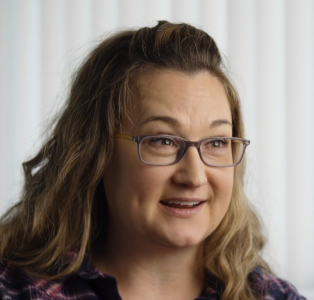
We are very grateful to Learning Technics for the help that they have given our family. I would strongly recommend this program to anybody.
Easy to do
We make it easy for you to know every step in the program. If you ever do get stuck, we provide a student success guide to help you along the way.
Fun and engaging
This program isn't more "homework". Most students are relieved to find that our therapy is closer to games and puzzles than it is to traditional school work.
Permanent results
When you graduate the program your progress doesn't slip away. Students brains have developed new and lasting pathways that allow them to continue learning far into the future.

Everything you need
- Do it anywhere. Everything is online. All you need is the internet.
- Student success guide. Your own personal mentor to help you through the program.
- Digital library. Get access to all of our videos, PDFs and more.
Pricing plans for families of all sizes
Choose an affordable plan that’s packed with everything you need to make learning easier.
Monthly Subscription
Full access as long as you're subscribed. Most students graduate in 6 to 9 months.
- Up to 1 student
- Cancel anytime (no hidden fees).
- User progress tracking
- Student success guide
- Does NOT include materials kit
Lifetime Access
Most popular
One up front payment and you have full access forever.
- Up to 1 student
- User progress tracking
- Student Success Guide
- Free materials kit included ($220 value!)
- Full access forever
30-Day Money-Back Guarantee
We back every sale with a 30-day money back guarantee. If you're somehow not happy with your purchase, reach out and let us know.

Frequently asked questions
-
Learning Technics is a cognitive development center that uses multi-sensory techniques to stimulate and promote neurological development. Through the process of neuro-plasticity we are able to strengthen the cognitive processes in the brain to counteract the effects of, and permanently treat dyslexia, ADD/ADHD, dysgraphia, processing disorders, and more.
-
Over thirty years ago, John Heath and Sally Higley, founders of Learning Technics, were parents struggling to find an answer to a very important question: why were their bright and eager children struggling to learn? Like so many other parents, they had a child that was struggling to learn in a traditional setting. They both knew the school system and tutors simply weren’t enough, but what could they do? Their children needed a different approach to learning and education and they were determined to find the answer. Little did they know their journey would last 30 years and lead to the birth of Learning Technics. As John and Sally sought innovative ways to teach their children, they began to study and test the latest neuro-scientific research from dozens of academic disciplines. With the assistance of a program board consisting of MDs, PhDs, and occupational therapists, they created Physio-Neuro Therapy—a multi-sensory program designed to permanently correct learning struggles and help students lead successful academic and professional lives.
-
Learning Technics uses a proprietary software platform called ThinkFast. ThinkFast provides an easy-to-follow layout that guides the parents every step of the way. ThinkFast is not a resource where your students will simply sit and the computer and stare at the screen. All of the videos and instructions on ThinkFast are designed to show parents the way to complete the activities with their students. Each day you will have seven activities to complete, one activity from each of the cognitive processing categories, which are Focus/Figure-Ground, Cross-Pattern/Shape, Motor-Match/Size, Mental Picture, Tracking, Direction, and Position in Space. Once an activity in a category is completed, the next activity from the category will automatically show up in your daily activity dashboard, eliminating any guess work.
-
This program has successfully helped students with learning difficulties including (but not limited to): ADD/ADHD, Dyslexia, Dyscalculia, Dysgraphia, Dyspraxia, Nonverbal Learning Disorders, Auditory Processing Disorders, Language Processing Disorders, Visual Processing Disorders, Visual Memory, Working Memory, and Cognitive Skills.
-
We accept any students that are struggling in school or want to improve their ability to learn. No diagnosis necessary.
-
Because everything is available online you can use it anywhere with an internet connection.
-
The average student can get through the program in 26-30 weeks. It requires practicing the activities with your kids 5 days a week for about 30 – 60 minutes per day.
-
The full program is designed to work best with students ages 7 years and up. Many of the activities can be done with younger children, however, they may not be able to complete all of the higher-level activities.
-
Our program has proven to be effective with many higher-functioning autistic students. The results may vary depending on the student's ability to perform the activity as designed.
-
The program will help with many behavioral issues depending on the student's willingness to cooperate.
Want to take our free quiz?
Start here.Read some of our amazing success stories
Click on an image to read the full story.
-

Zoey
Improved 2 grade levels in
reading comprehension. -
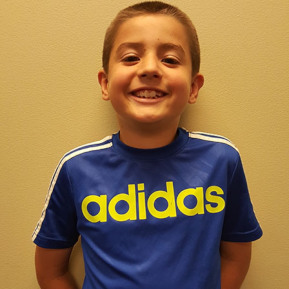
Cayson
Improved 2 grade levels in
reading & reading comprehension -
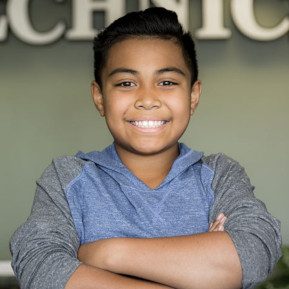
Kj
Improved 1.5 levels in reading,
and 50% in math comprehension. -
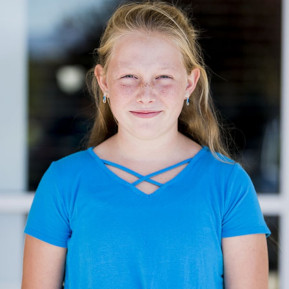
Amberly
Improved 2 grade
levels in spelling -

Ethan
Improved grades to A's and B's in
just six months -

Chloe
Gained 2 grade levels in reading,
dramatically improved handwriting -
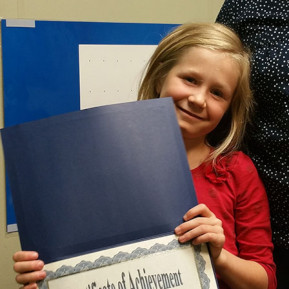
Zuri Ann
Improved 2 levels in reading in
only 6 months -

Peterson
Gained 2 levels in reading comprehension,
and improved handwriting dramatically
What people are saying about us on Google
I love Learning Technics! This program uses exercises to get the left and right side of the brain working together. It opens up the world of reading, coordination, an, “I can” attitude, and can change a child’s school failures into successes. I just listened to a young man read who was completely unable to a year ago. After teaching 26 years, this gives me hope that children ‘s lives can be changed for the better. It takes a lot of work and commitment. I highly recommend this program. Yvonne Harris Retired Teacher, Professional Reading Tutor.

5 out of 5 stars
We loved our time at Learning Technics. Every teacher we experienced was patient, knowledgeable and focused on my child. I am grateful for the skills it built for my then, 10-11 year old son.

5 out of 5 stars
We enrolled our 11 yr old son due to his low scores in school - Learning Technics did an AMAZING job for him and our family. We put in the time and effort and it was 100% ALL worth it. My son now excels in all of his classes, the confidence he once had is BACK and the determination to be better in his eyes is so great to see. Now if he seems to struggle, we talk about looking into our tools we learned from Learning Technics to see if they will help on what he is currently working on to help him. If you are questioning the process - DON't !! IT REALLY WORKS! I was very impressed and would do it all over again! We looked around and so glad we found Learning Technics.

5 out of 5 stars
My daughter was in desperate need of help with her ability to learn. I was so grateful that we found this program for her as we had tried everything else! She went from struggling to focus on words on page while reading to reading all the time after going through this program!! Her ability to learn and retain new information is right on target now. She was 13 when we started and had a lot to catch up on but Learning Technics made it possible! If you are considering this program-don't wait! The sooner you start the less behind your child will be. I actually loved the program so much that I joined on as a teacher so I could help other kids gain the same ability to learn AND the confidence in themselves at school again. That gift happened for my daughter and I want that for your child too! I can't recommend this program enough!

5 out of 5 stars
We signed up for Learning Technics as a last ditch effort. My son was in the second half of second grade and was MAYBE reading at beginning 1st grade level. Maybe. He was finally accepted to have an IEP, we had a reading tutor and we were doing all we could at home. Most of that ended in tears. We just didn't know what else to do, but I knew there was something. It was actually his reading tutor that turned us to LT as hee grandson had finished the program a couple years earlier. We began in Feburay of 2022. We worked hard all the way through summer and some into 3rd grade. And it is work, it's a commitment! For the student and the parent! It's sometimes a fight, but it's worth it! Beginning in 3rd grade in the library test he was a 1.3-1.8 level according to the school. Fast forward to December and they do another one and is at 2.3-2.8! He is almost on grade level now. Last night he read a book to me with ease and minimal mistakes. My momma heart was so happy! Learning Tecnics turned things around for us! I loved it so much, I became a trainer too so I can help many more kids!

5 out of 5 stars
They changed my son’s life!! He does so much better in school now- the transformation has been incredible!!

5 out of 5 stars
Ready to improve your student's performance for good?
Start by creating a free account to take our quiz, get immediate feedback, and recieve your first 5 exercises.